
I still remember the first time I opened ChatGPT back in late 2022.
I was an eighteen-year-old freshman in my very first semester of college, knowing almost nothing about computer science and even less about artificial intelligence. Like most people on the internet that week, I heard everyone raving about this new conversational website that could supposedly do anything. Naturally, I decided to put it to the ultimate test: I copied a question from one of my introductory programming quizzes and pasted it into the prompt box.
It gave me an answer that looked convincing, but when I ran it, it completely failed. It didn’t compile, made up functions that didn’t exist, and left me more confused than when I started.
My honest reaction back then?
“Wait, is this it? This thing is just another dumb bot. Why is the entire internet losing its mind?”
I had no idea how transformers worked, what next-token prediction meant, or why anyone cared. To me, it felt no different than the clunky customer service bots on telecom websites that could only reply with canned FAQ answers. I closed the tab, went back to my textbook, and didn’t think much of it.
Looking back, that initial skepticism makes me laugh. Over the next four years, it completely changed my workflow and reshaped my career path.
The Time Before AI
Before AI became the default companion for developers, writing code had a very distinct rhythm to it.
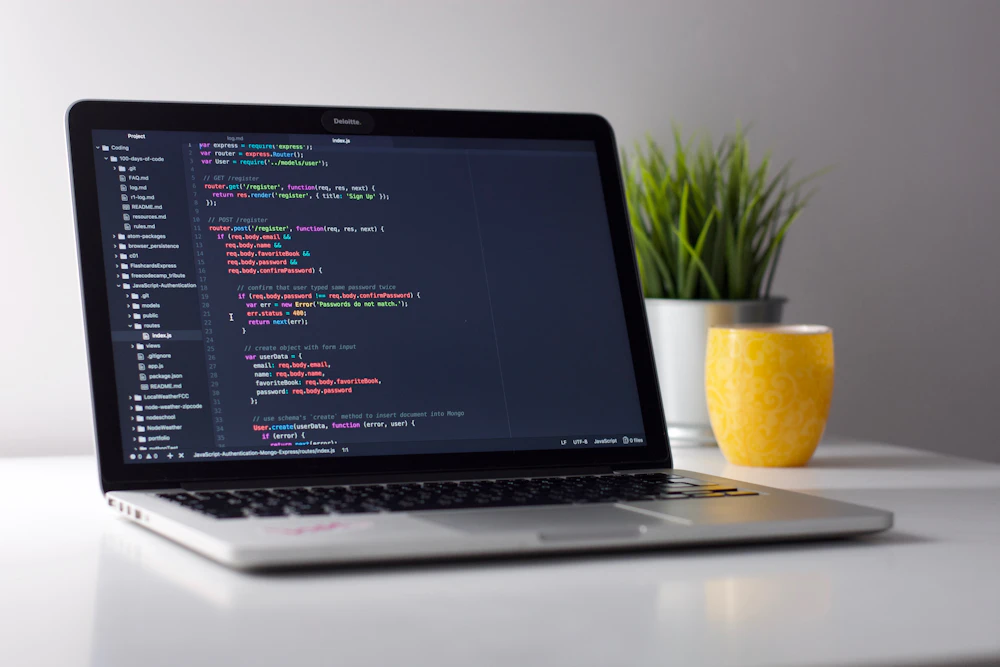
I remember sitting in front of a blank VS Code window, typing out every single bracket and semicolon by hand. When the terminal spat out an ugly red error stack trace, you didn’t have a magic assistant to interpret it for you. You had to do things the old-fashioned way:
- Copy the exact error message.
- Paste it into Google.
- Open three different Stack Overflow tabs from 2013.
- Dig through conflicting answers where the top upvoted response started with “First, install jQuery…”
- Dig into official documentation that was often sparse or intimidating.
- Try a tweak, rerun the script, and pray it worked.
There was actually something deeply satisfying about that era. When you spent two hours banging your head against an off-by-one index error or an undefined pointer in C++, and you finally solved it on your own, the dopamine hit was real. You felt like an actual craftsman who understood every single screw in the machine.
I don’t look back on those days with bitterness. That manual struggle taught me how to read code critically, how computers actually execute instructions, and how not to panic when things break.
From Writing Code to Asking AI
Then, almost overnight, the landscape shifted.
Model iterations kept dropping. Suddenly, AI wasn’t failing my simple homework questions anymore. It was writing clean boilerplate, explaining tricky algorithms in plain English, and finding off-by-one errors before I even noticed them.
My daily coding habits began to transform:
- Before: Think of logic $\rightarrow$ manually write syntax line-by-line $\rightarrow$ hit error $\rightarrow$ spend 30 minutes searching documentation.
- After: Think of logic $\rightarrow$ describe intent to AI $\rightarrow$ review generated code $\rightarrow$ paste and test $\rightarrow$ ask AI to explain edge cases.
At first, I felt a little guilty. Was this “cheating”? Were we going to forget how to code?
The more I worked with it, the more I realized software development was not dying. The interface was simply changing. You still needed to understand software architecture, data structures, and edge cases. Without strong fundamentals, you could not spot when an AI model hallucinated a subtle bug.
The difference was that the friction of remembering obscure syntax had vanished. My mental energy could shift from “What was the exact syntax for this regex again?” to “How should these systems talk to each other?”
AI Became More Than Just a Tool
Experiencing this shift firsthand lit a fire in me. I didn’t want to just be someone who consumed AI tools; I desperately wanted to understand the machinery powering them.
When I reached my fifth semester at Telkom University, I made the conscious decision to choose the AI & Data Science specialization track.
Over the next two years, the curtain was pulled back:
- I learned how classical machine learning algorithms find decision boundaries.
- I dove into deep learning, backpropagation, and loss functions.
- I spent late nights debugging PyTorch tensors, exploring computer vision models like YOLO, and fine-tuning architectures.
- For my undergraduate thesis, I worked on multimodal NLP, combining GloVe embeddings, TF-IDF representations, MobileNet vision features, and Particle Swarm Optimization to classify social media credibility (later published with IEEE).
That academic journey changed my relationship with AI forever. It was no longer a black-box mystery or a shiny chatbot. It was mathematics, matrix multiplications, optimization landscapes, and probabilistic representations of human knowledge.
2026: The Rise of AI Agents
Which brings us to 2026. If the jump from 2022 to 2024 felt fast, the last two years have been downright dizzying.
The biggest breakthrough for me hasn’t just been smarter text generation. It has been the transition from chatbots to autonomous AI agents.
In 2023, AI was fundamentally passive. You pasted a prompt, got an answer, copied the code, and pasted it back into your editor. If you had an error, you copied the error back to the chat window. You were the glue holding the workflow together.
Today, working with an AI agent feels like having a junior engineer pairing right beside you:
- It doesn’t just suggest a code block; it inspects the whole repository structure.
- It navigates between dozens of files, recognizing how changing an interface in
types.tswill affect a component in another directory. - It can run terminal commands, execute builds, read compiler diagnostics, and iteratively fix its own mistakes without you copy-pasting back and forth.
- It uses tools, connects to APIs, and automates multi-step workflows end-to-end.
You are no longer writing every prompt like a prompt engineer trying to coax an answer out of a box. You are collaborating on high-level goals.
Seeing this evolution in real-time is what made me fall in love with AI Engineering. The real challenge today isn’t just training a raw model from scratch; it’s designing the systems, agentic loops, tool definitions, context retrieval (RAG), and on-device pipelines that turn intelligence into practical, reliable software.

I Am Still Learning
To be completely honest, I don’t consider myself an expert. Far from it.
One of the most humbling things about working in tech right now is that the ground shifts under your feet almost every month. New model architectures, novel agentic patterns, edge compute breakthroughs, and reasoning frameworks appear faster than anyone can read papers.
There are plenty of concepts I am still wrapping my head around every single week. Whether it’s optimizing on-device CoreML quantization for mobile hardware or designing resilient tool-calling loops for multi-agent workflows, there is always a mountain of things I don’t know yet.
And honestly? That’s the best part.
There is something thrilling about being in a field where nobody has all the answers yet, and where curiosity and willingness to experiment matter more than ten-year-old textbooks.
And Somehow, AI Helped Me Build This Website
There is a funny kind of symmetry to all of this.
As I sit here writing this post on my personal portfolio website, I can’t help but smile. Building and refining this site (configuring Astro builds, designing responsive layouts, structuring content collections, and tuning deployments) brought together what I learned over the past few years, with an AI agent helping me orchestrate and debug.
In 2022, I scoffed at ChatGPT for failing a freshman quiz and wrote it off as a toy.
Four years later, I’m collaborating with autonomous AI agents to build, polish, and deploy the very portfolio you’re reading right now.
I don’t know what AI engineering will look like four years from today. Things might look completely unrecognizable again by 2030. But after watching the world transform between 2022 and 2026, I know one thing for certain: I definitely want to be right here building in the middle of it.
Last updated on September 16, 2026 at 12:23 PM UTC+7. See Changelog